Guides
How to Get a Portrait of a Pet Who Passed Away (From the Photos You Have)
You can’t take new photos anymore — and you don’t need to. How to turn the pictures already on your phone into a faithful, gentle portrait of a pet who has passed.
The short answer
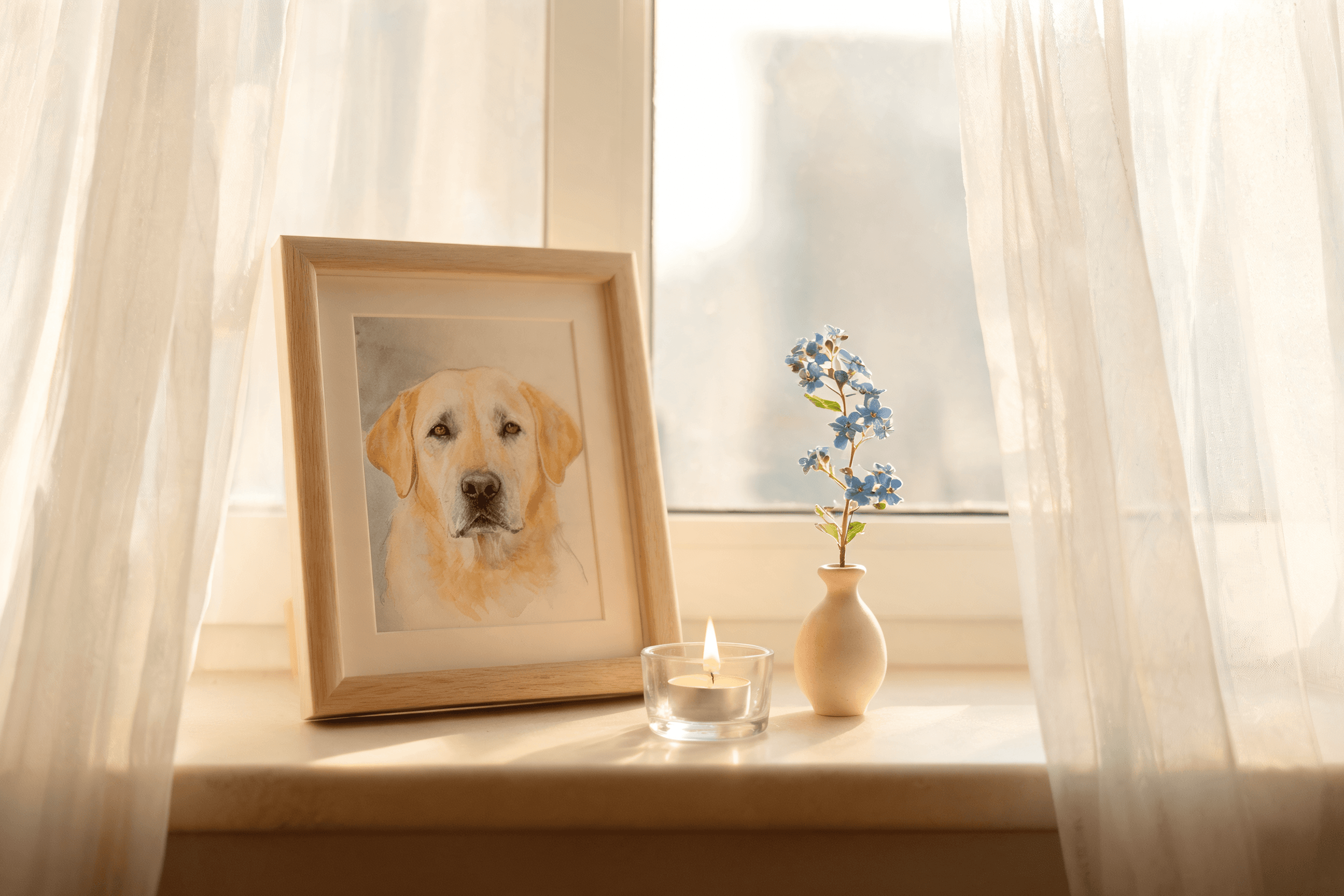
You can get a faithful portrait of a pet who has passed away using the photos you already have — including older, imperfect ones. AI portrait services need only a few images where the face is reasonably clear. Choose a soft, calm style, take your time, and print only when you’re ready.
The hardest part of wanting a portrait of a pet who’s gone is the feeling that you missed your chance — that you should have taken better photos while you could. You didn’t miss it. The pictures scattered across your phone, old backups and family group chats are almost certainly enough. This guide walks through how it works, gently and step by step.
Can you really make a portrait from old photos?
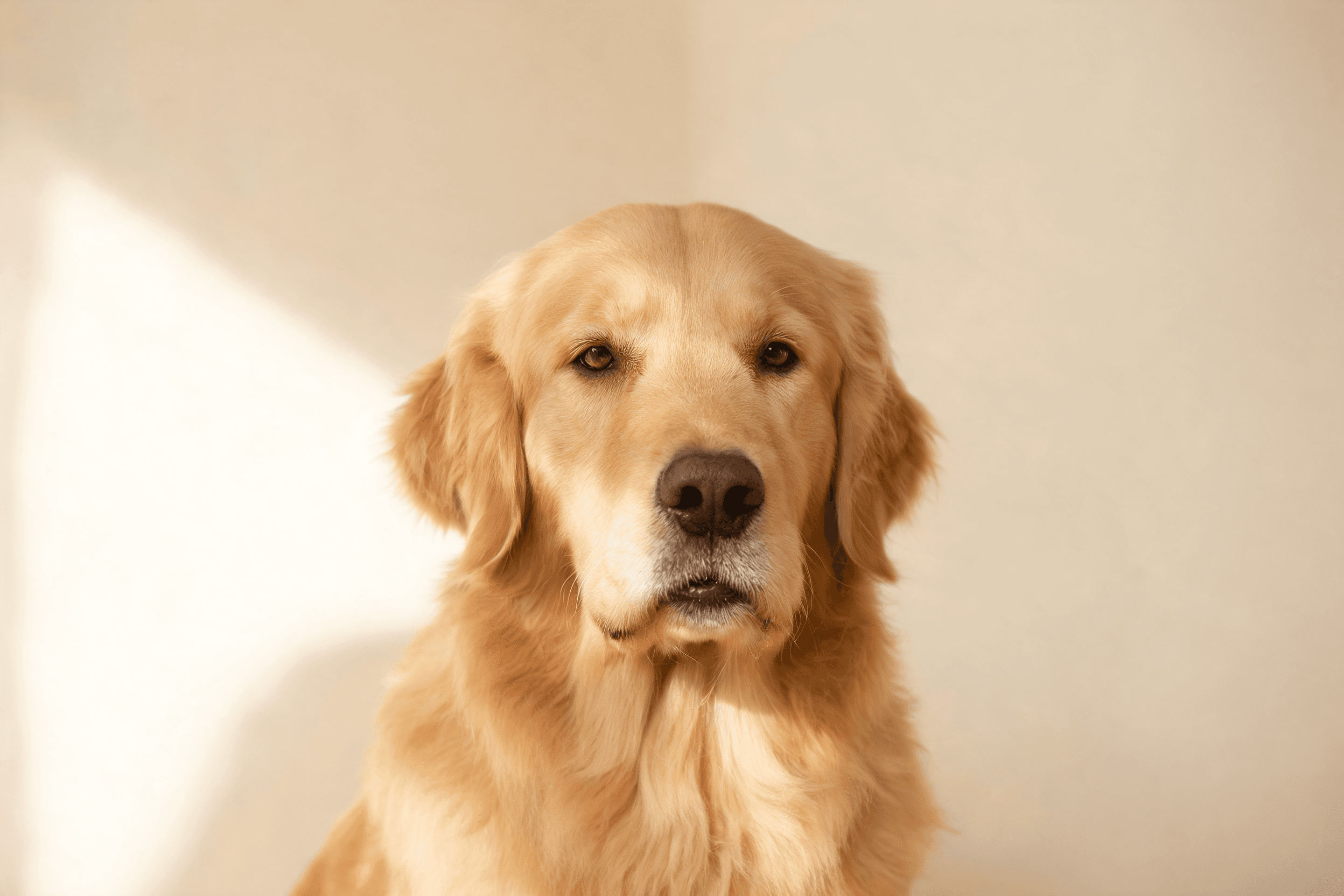
Yes. Modern AI portrait tools recreate a pet from a handful of reference photos, and they care about one thing above all: a clearly visible face. They don’t need studio lighting, a recent date or high resolution. Photos from years ago, cropped from group shots or saved from an old phone all work, as long as your pet’s eyes, muzzle and markings can be made out.
This is one of the quiet advantages AI has over commissioning a hand-painted piece: a painter interprets one photo, while AI studies several at once — so a mix of imperfect images adds up to a more faithful likeness than any single one of them.
How to choose the photos
- 1.Gather everything first. Your camera roll, old phones, cloud backups, and family or friends who took pictures too — people are glad to be asked.
- 2.Check your videos. A paused video frame is often the clearest “photo” you never took. Screenshot the moments where their face is sharp.
- 3.Favor the face. Pick 3–5 images where the eyes and muzzle are in focus, even if the background, lighting or framing is poor.
- 4.Mix ages freely. Puppy photos next to senior photos are fine — decide which era of their life you want the portrait to show, and weight your picks toward it.
- 5.Set aside the very blurry ones. One soft image among several sharp ones is harmless; five soft images weaken the likeness.
One photo can be enough to start
If a single clear picture is truly all you have, it can still carry a portrait — the result simply leans harder on that one image. Our photo guide covers what makes a reference photo usable.
Styles that tend to feel right
There’s no correct choice here — only what helps you feel close to them. That said, a few directions come up again and again for memorial pieces:
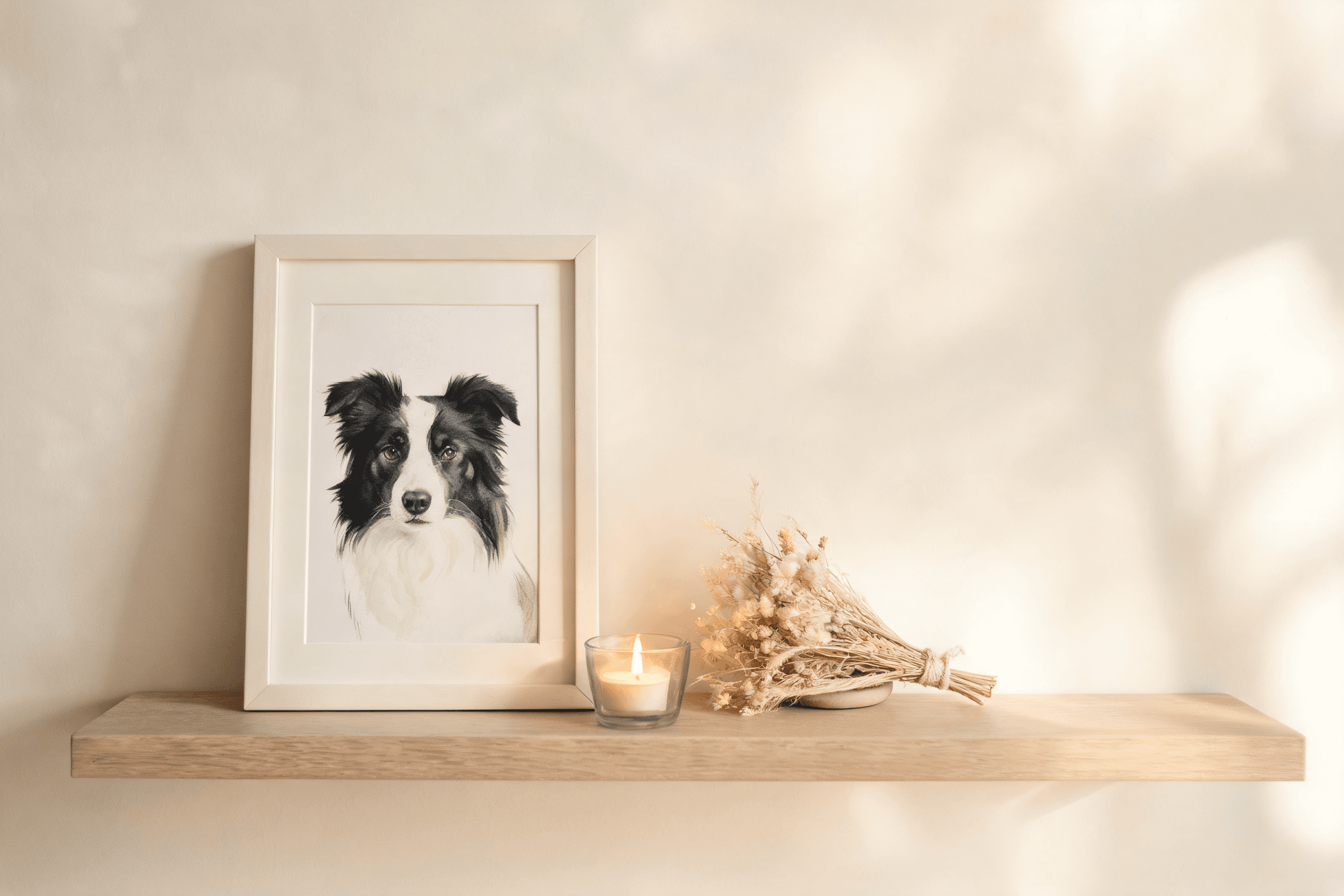
- Soft, painterly warmth — gentle light and quiet brushwork. The Poetic style is the one most people choose for remembrance.
- Understated pencil and charcoal — the Sketch style feels timeless and calm, especially in a simple frame.
- Dignified and classic — a Royal portrait suits pets who carried themselves like they owned the house, because they did.
- Their happiest self — some people want joy, not solemnity: ears up, mid-grin, the version you laugh-cry to remember. That’s just as valid.
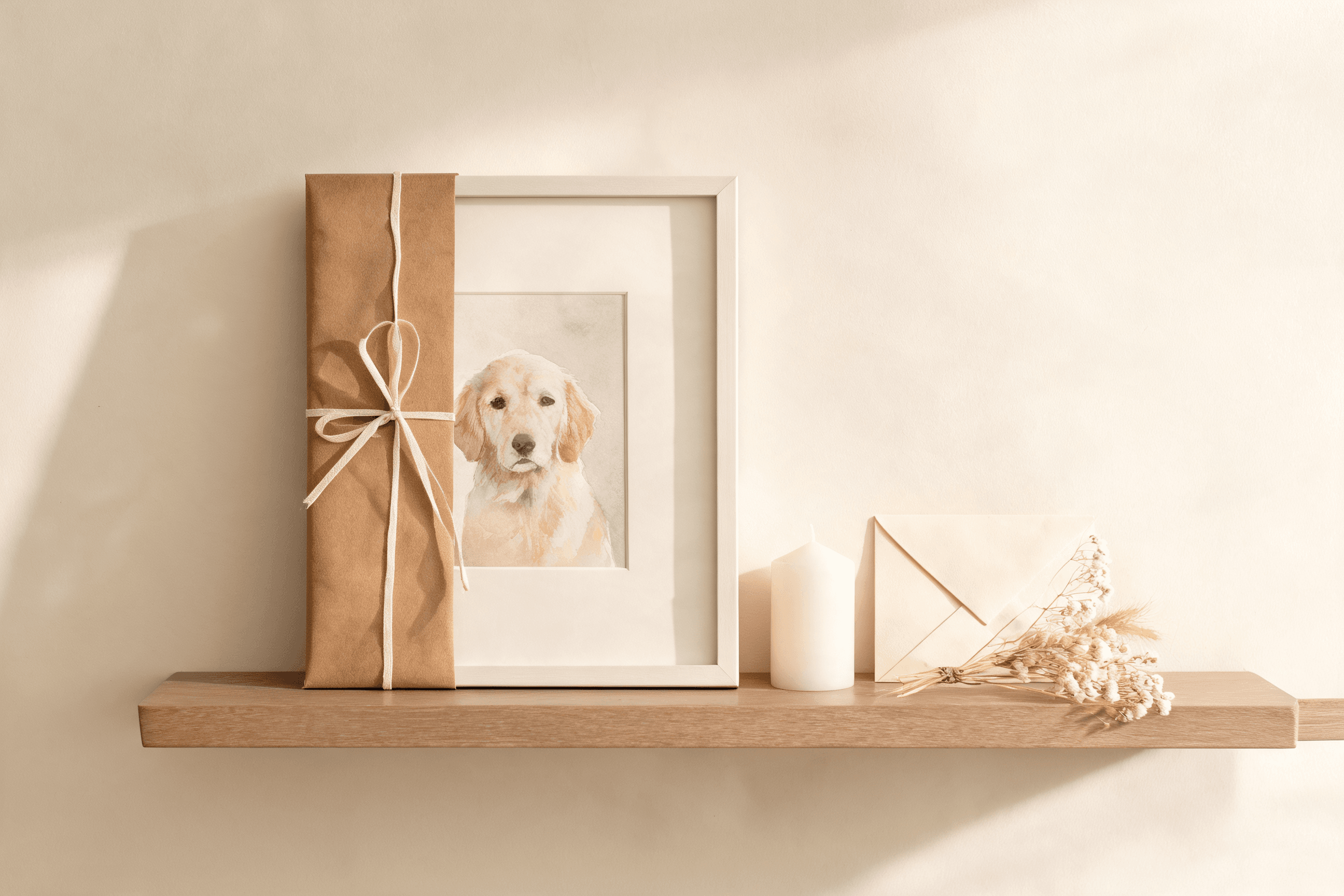
If you’re choosing for someone else rather than yourself, our guide to pet memorial portrait ideas walks through the options with gifting in mind.
What it costs and how long it takes
A commissioned memorial painting typically runs several hundred dollars and takes weeks — and for many people, a long email exchange with a stranger is more than grief has room for. AI portraits are the gentler logistics: upload the photos you gathered, and receive a private gallery of portraits in about 15 minutes, from $14.99. Our pricing guide compares the full range if you’re weighing both paths.
A word on timing
Some people make a portrait within days of the loss, and it helps. Others need months before they can look through the photos at all. Both are normal. The photos will still be there, and so will this option — there is no deadline on remembering someone well.
When you’re ready
Turn the photos you already have into a faithful, gentle portrait — privately, in your own time.
Create my portraits — from $14.99Love them, or regenerate any portrait — free.
Frequently asked
Can I get a portrait of a dog or cat that passed away years ago?
Yes. As long as you have a few photos where the face is reasonably clear — including scanned prints or images from old phones — an AI portrait can recreate a faithful likeness, regardless of how long ago they passed.
What if I only have blurry photos of my pet?
Check your videos first: paused frames are often sharper than the photos you kept. If everything is genuinely soft, a portrait is still possible, but the likeness will be more of an interpretation — soft painterly styles handle this most gracefully.
Do screenshots from videos work as reference photos?
Yes. Screenshot the frames where the face is sharp and well lit. Several video stills from different moments work just like regular photos.
Will the portrait actually look like my pet?
AI portrait tools study the face, markings and expression across all the photos you provide, so the more usable images you gather, the closer the likeness. Distinctive markings come through especially well.
Written by
Florian Chataignier — Founder, Puppy AI
Florian is the founder of Puppy AI. He has spent the last two years training and tuning the diffusion models behind tens of thousands of pet portraits, and writes about getting genuinely good art out of a phone camera roll.