Tips
How to Photograph Your Cat for a Beautiful Portrait
Cats have opinions about cameras. Here’s how to get the clear, characterful photos an AI portrait needs — without a single staged pose or cooperative subject.
The short answer
To photograph your cat for a portrait, shoot a handful of sharp photos (around five) in soft daylight at the cat’s eye level, catching different angles and expressions with the whole face visible. Work when they’re calm, use treats or a toy for attention, and avoid blur, harsh shadows and heavy filters.
Cats don’t take direction. The trick isn’t making them pose — it’s being ready when they do something photogenic, which is roughly always. Here’s how to get portrait-grade shots from an uncooperative muse. (For the general version, see our pet photo guide.)
Work with the cat, not against it
- 1.Wait for calm. Post-meal or post-nap is golden hour for cat cooperation.
- 2.Get on their level. Crouch or lie down so the camera meets their eyes.
- 3.Use a lure. A treat or wand toy held near the lens earns a few seconds of attention and perked ears.
- 4.Shoot in burst mode. Fire off many frames and keep the few that are sharp.
- 5.Capture variety. Straight-on, three-quarter and profile; relaxed and alert.
Light is everything for cats
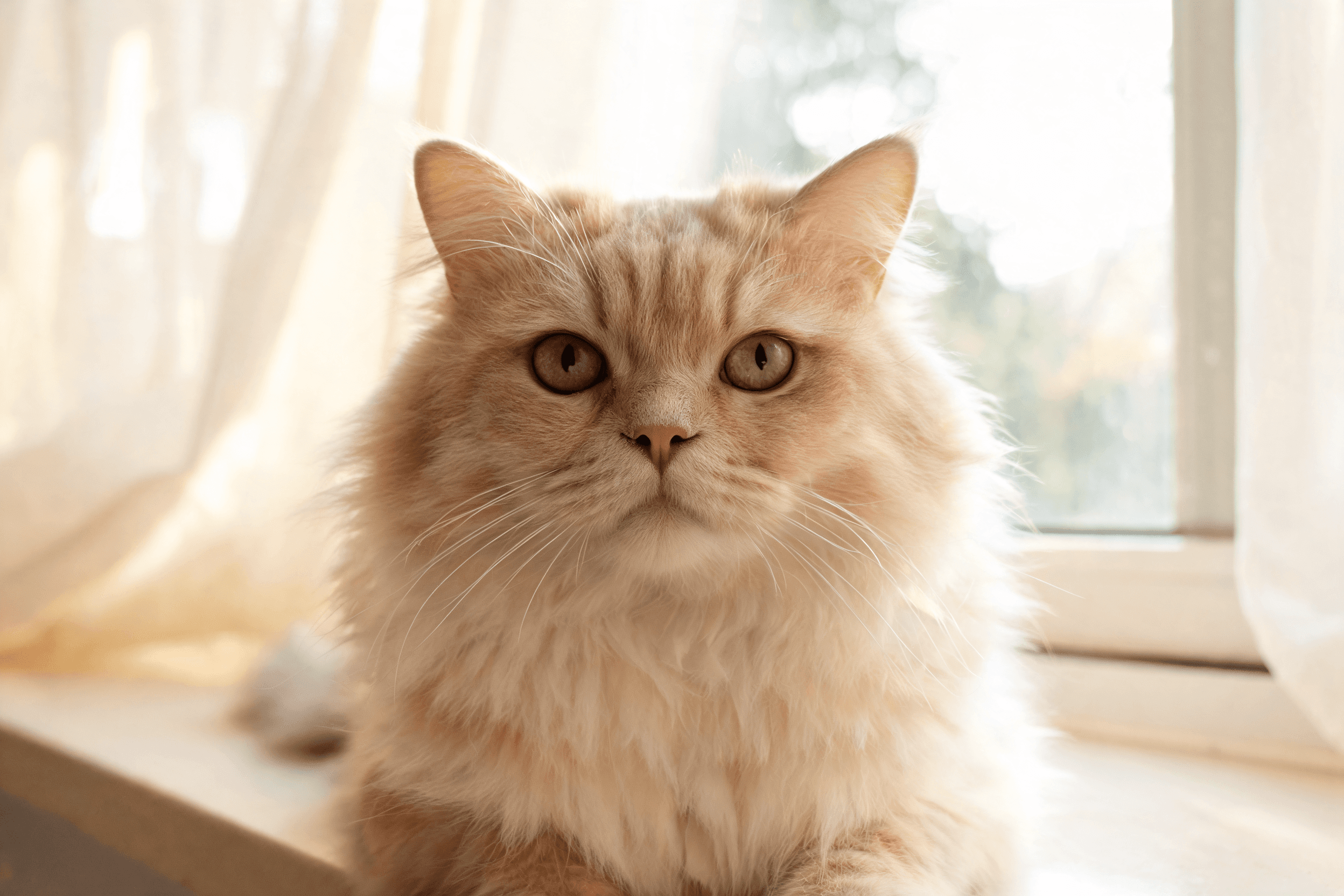
Soft, indirect daylight near a window is ideal. It brings out eye colour and fur texture without harsh shadows. Avoid direct flash — it causes flat faces and eerie eye-shine.
Tricky cats, solved
Black cats
Dark fur disappears in low light. Shoot in bright, soft daylight and tap your phone screen on the face to expose for it, so features don’t vanish into a silhouette.
Fluffy breeds (Persian, Maine Coon, Ragdoll)
Brush them first and use directional window light to show off the ruff and ear tufts. These coats look magnificent in the royal style — see the Maine Coon and Persian pages.
The cat who won’t sit still
Don’t fight it. Follow them around for ten minutes with the camera ready; candid moments often beat staged ones, and the AI only needs a clear view of the face.
What to avoid
Blur, harsh flash, heavy "beauty" filters (they erase the details that make your cat yours), and frames with other pets or people in them. A handful of sharp, well-lit photos beats a hundred blurry ones.
Crown your cat
Upload your best shots and get a gallery of portraits that keep their real face — from $14.99.
Create my portraits — from $14.99Love them, or regenerate any portrait — free.
Frequently asked
How do I get my cat to look at the camera?
Hold a treat or a wand toy just above the lens to draw their gaze, and shoot in burst mode to catch the moment. A few forward-facing frames plus some natural angles give the best result.
How do you photograph a black cat?
Use bright, soft daylight and tap your phone screen on the cat’s face to expose for it. This keeps the eyes and features visible instead of losing them to a dark silhouette.
How many photos of my cat do I need for a portrait?
Aim for around five sharp photos with the face clearly visible, taken from a variety of angles and expressions in soft light. Variety matters more than sheer quantity.
Written by
Florian Chataignier — Founder, Puppy AI
Florian is the founder of Puppy AI. He has spent the last two years training and tuning the diffusion models behind tens of thousands of pet portraits, and writes about getting genuinely good art out of a phone camera roll.